
What Happens When Light Waves Travel Through Materials Such As Air?
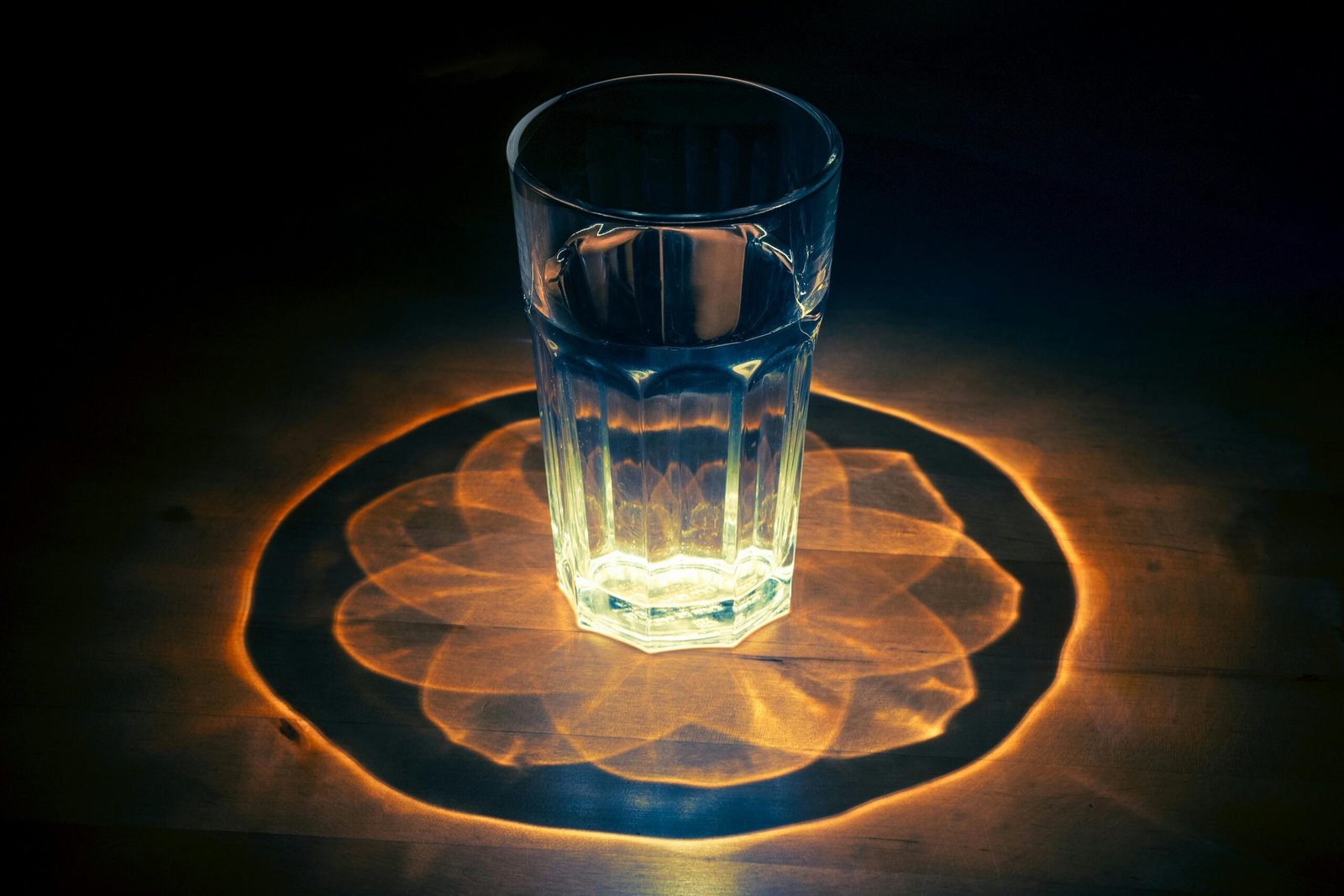
When light waves travel through materials such as air, they undergo a change in speed and direction. This phenomenon is known as refraction. You might have observed this effect when looking at a straw in a glass of water; the straw appears bent at the water’s surface. This optical illusion is a direct result of refraction.
The Phenomenon of Refraction
Light travels fastest in a vacuum, at approximately 299,792 kilometers per second. However, when light enters a different medium, like air, water, or glass, its speed changes. The amount by which the light’s speed changes depends on the optical density of the material. Denser materials slow light down more significantly.
Consequently, when light waves travel through materials such as air they bend. This bending occurs because one part of the wavefront enters the new medium and slows down before the other part. Imagine a marching band approaching a muddy field at an angle. The soldiers on one side hit the mud first and slow down, causing the line to pivot.
Why Does Refraction Occur?
Refraction happens because light is a wave, and waves change speed when they move from one medium to another. The change in speed causes the direction of the light ray to alter, unless it enters the medium perfectly perpendicular to the surface. The degree of bending is quantified by the refractive index of the material, which is the ratio of the speed of light in a vacuum to its speed in the material.
Therefore, when light waves travel through materials such as air they are interacting with the atoms and molecules within that material. These interactions cause a slight delay in the propagation of the light wave, effectively slowing it down. Different materials have different refractive indices.
Factors Affecting Light Speed in Materials
Several factors influence how light behaves when it travels through different materials:
- Optical Density: Denser materials have more atoms and molecules, which interact more strongly with light, slowing it down.
- Wavelength of Light: Different colors (wavelengths) of light bend at slightly different angles, a phenomenon known as chromatic dispersion. This is why prisms can split white light into a rainbow.
- Angle of Incidence: The angle at which light strikes the surface of the material affects the degree to which it refracts.
In conclusion, understanding what happens when light waves travel through materials such as air they helps us comprehend numerous natural phenomena. From rainbows to the functioning of our eyes and optical instruments, refraction plays a crucial role. This interaction between light and matter is fundamental to physics and our perception of the world around us in 2025.






Laisser un commentaire